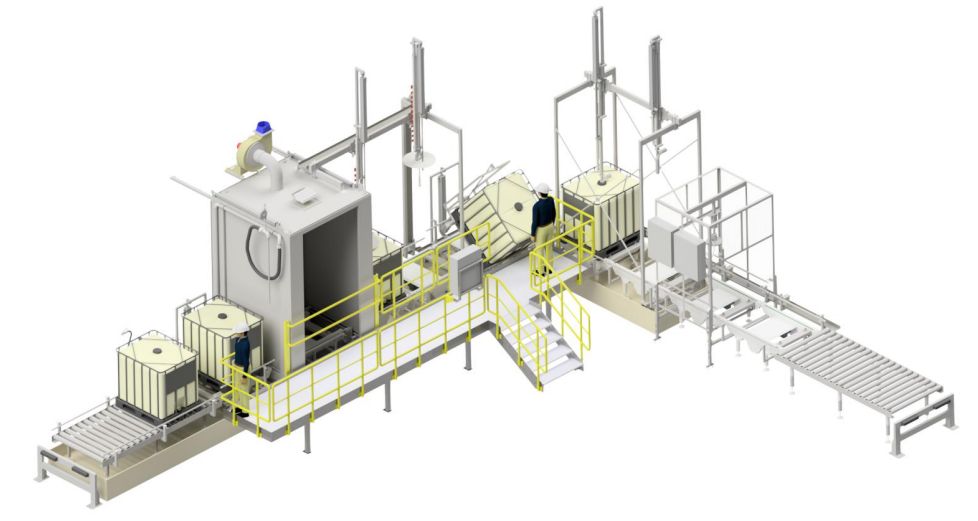
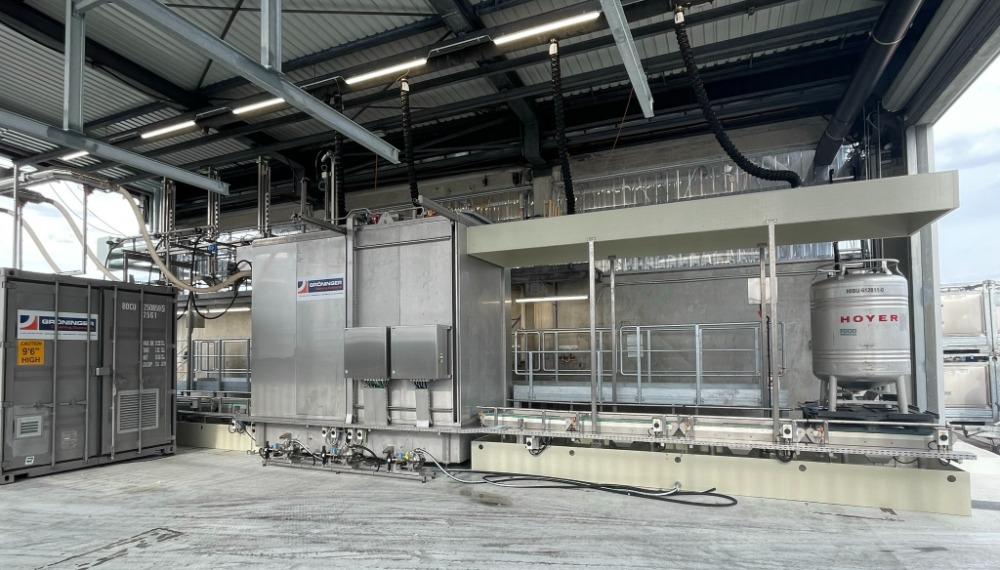
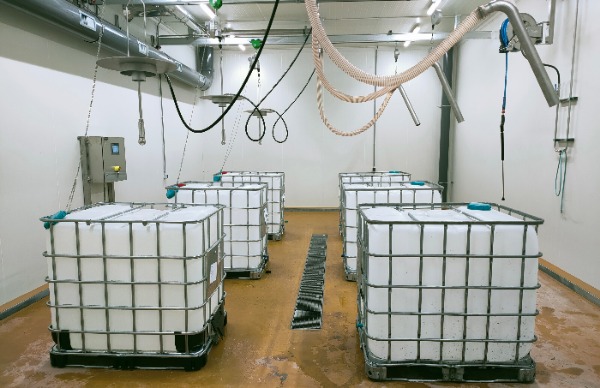
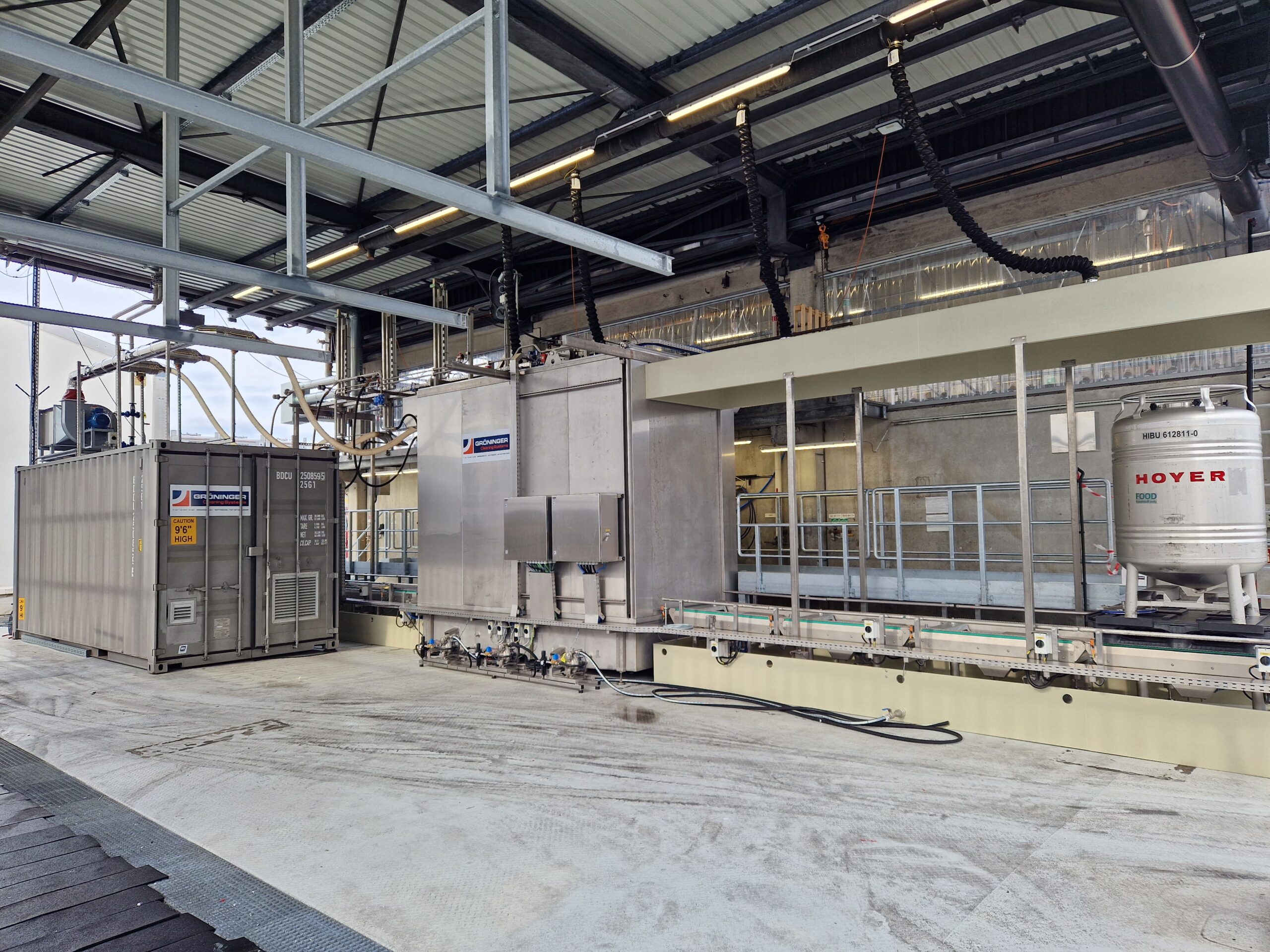
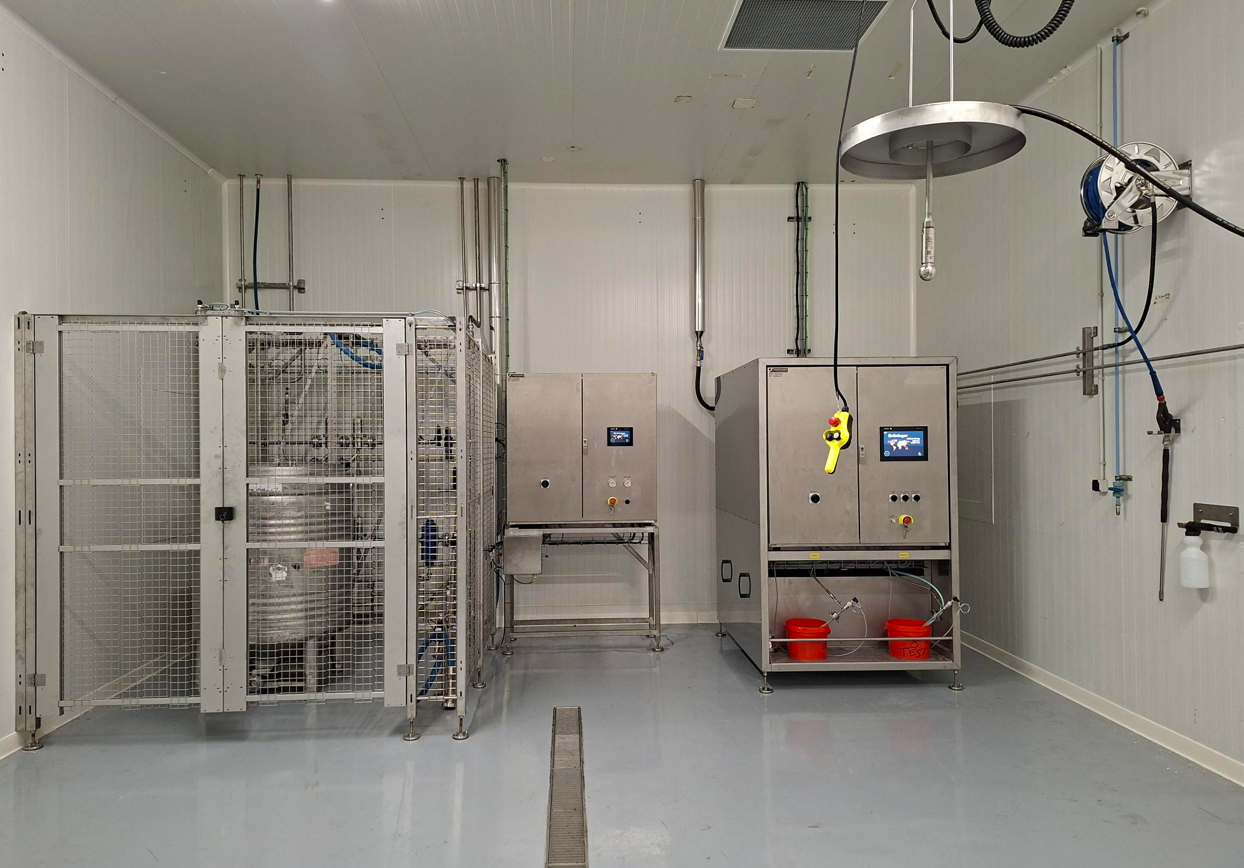
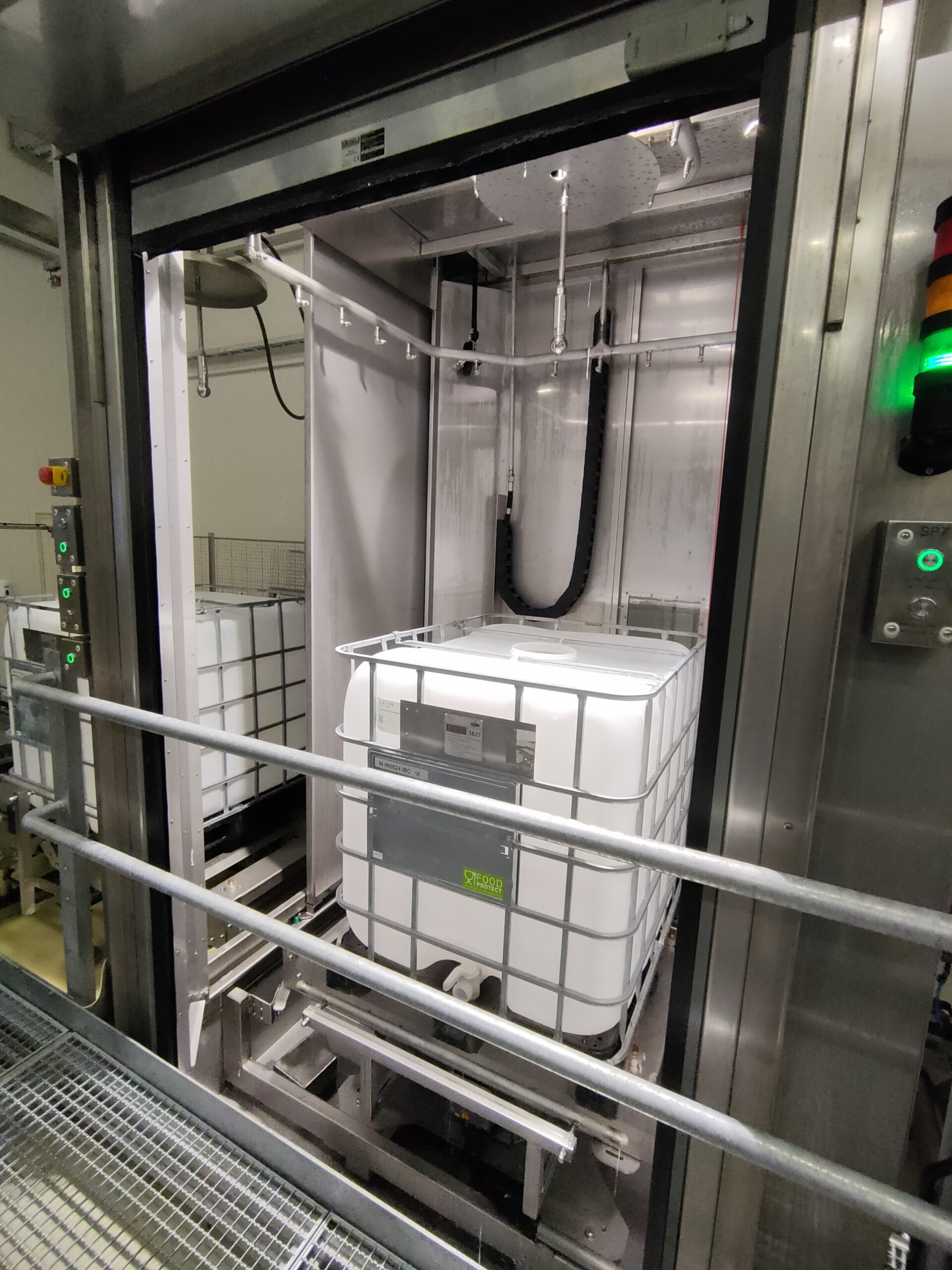
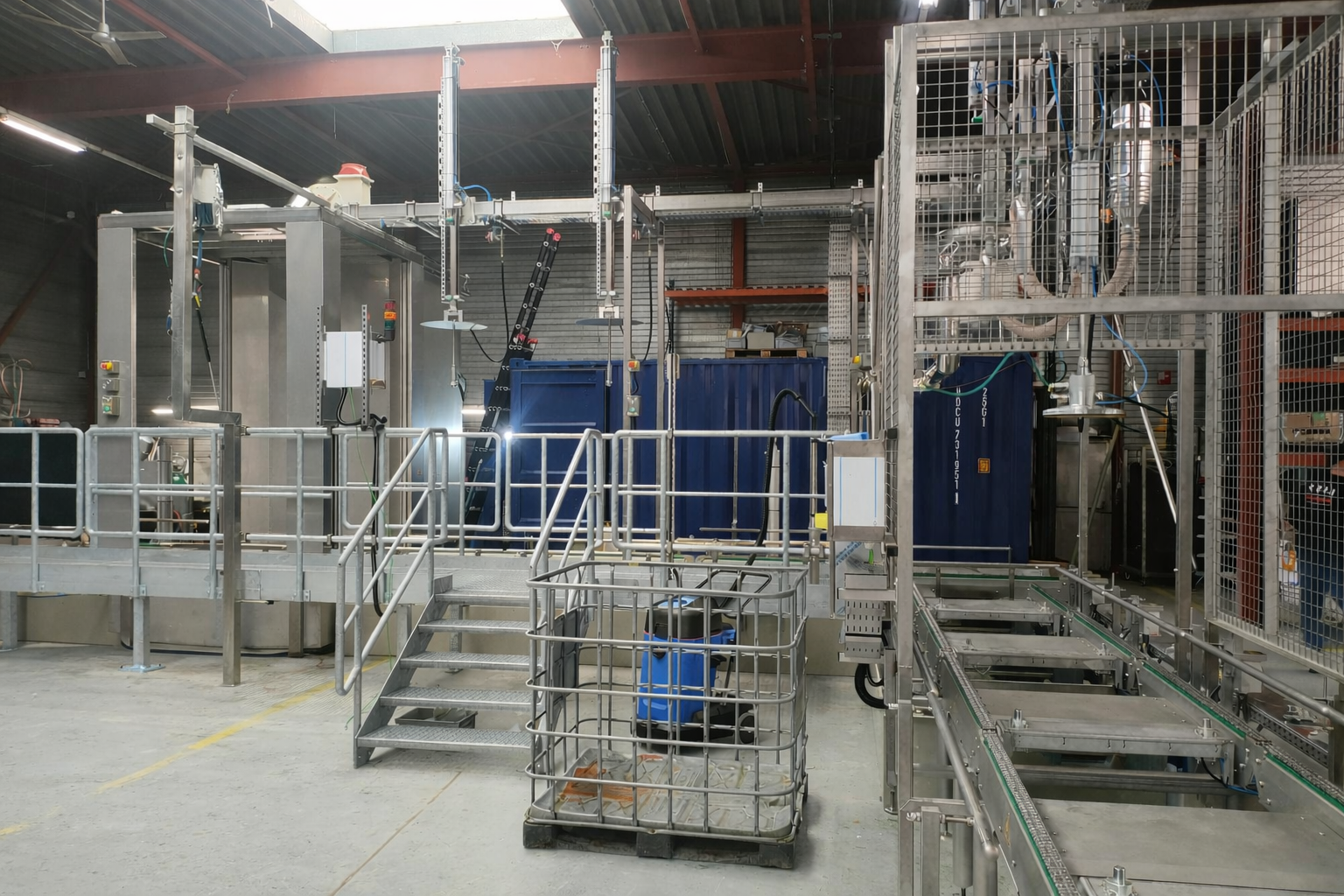
Gröninger IBC cleaning systems are available in a wide range of configurations, from manually operated units to fully automated solutions. In addition to IBCs, they are also suitable for cleaning stainless steel tanks and product containers used in industrial and logistics environments.
Various cleaning principles can be applied, such as recirculation systems or single-use (loss) cleaning, along with the associated parameters, including temperature, pressure, cleaning agents, and cleaning time. The optimal technical configuration is determined in consultation with Gröninger.
The systems can be designed as standalone units or integrated into a cleaning cabin. Key features include:
IBC cleaning: internal and external
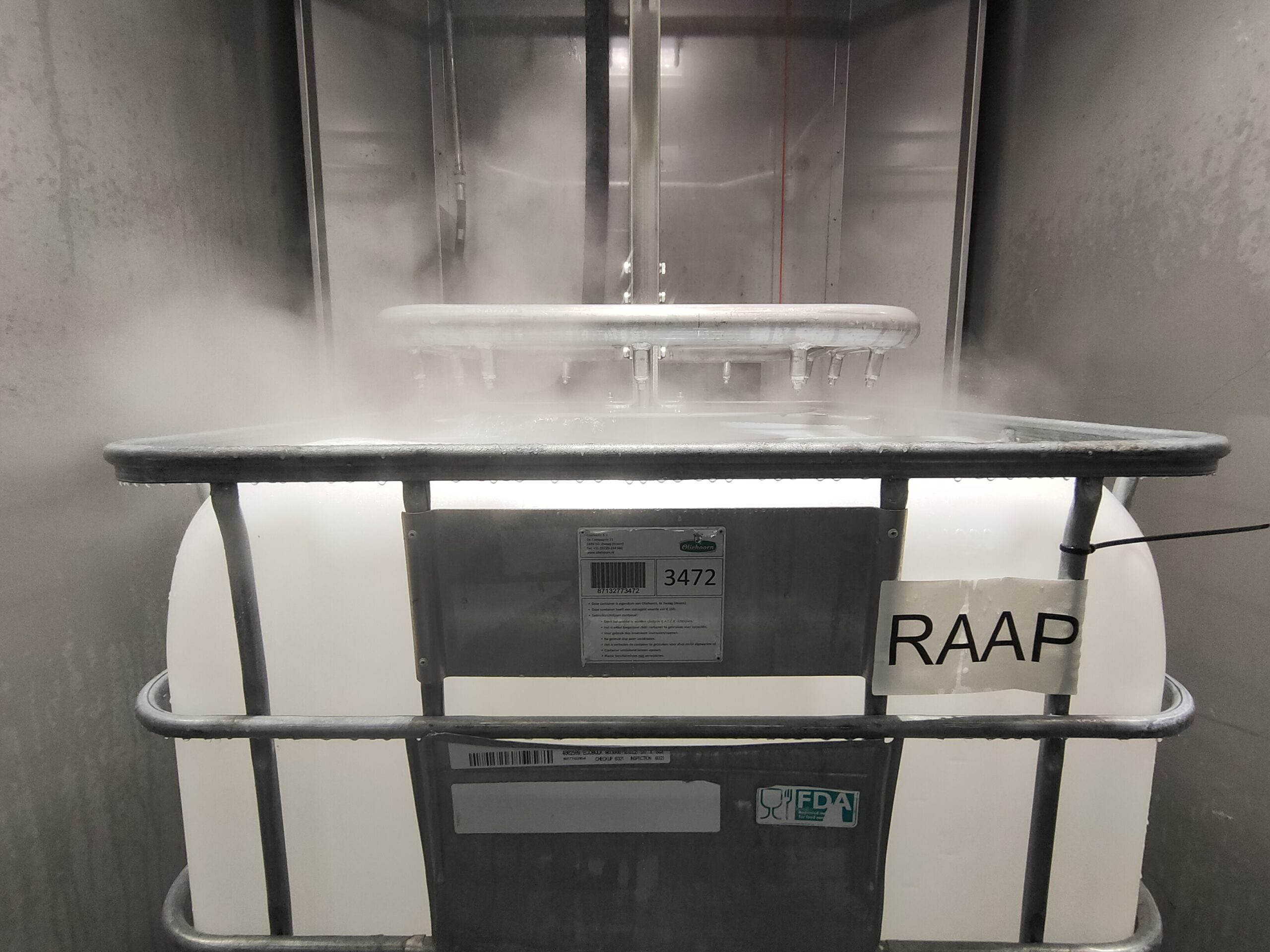
Internal cleaning of a container is carried out using a rotating spray head and can be performed at various operating pressures. The spray head is inserted into the IBC or stainless steel container either manually or automatically.
External cleaning of IBCs or stainless steel containers can be performed both manually and automatically.
Draining and drying of IBCs
After internal cleaning, a small amount of residual water always remains inside the IBC. To remove this water quickly, it is extracted using a pump or industrial wet vacuum, either manually or automatically.
The IBC is then dried by blowing hot air into the container at high velocity through an air lance. For this purpose, Gröninger supplies Drypack drying systems.
These extraction and drying systems deliver excellent results: IBCs can be completely dry within 6 minutes!
Leak testing of IBCs
IBCs must undergo periodic inspection and testing. One of these inspections is a leakproofness test. Using a Gröninger IBC leak testing system, this test can be carried out efficiently and reliably.
During the test, the IBC is pressurised for a specified period, after which the system measures any pressure loss. If the pressure drops too quickly under the defined conditions, the IBC is considered to be leaking and must be rejected.
The leak testing systems offer various configurations, depending on the customer’s specific requirements.
Disinfection, sterilization and steaming
Before, during, or after the cleaning process, various technical options are available to disinfect, sterilize, or steam the container, depending on the specific application.
Gröninger IBC cleaning systems can therefore be technically configured in many different ways. Equally important is the attention Gröninger devotes—based on extensive experience—to internal logistics. This includes:
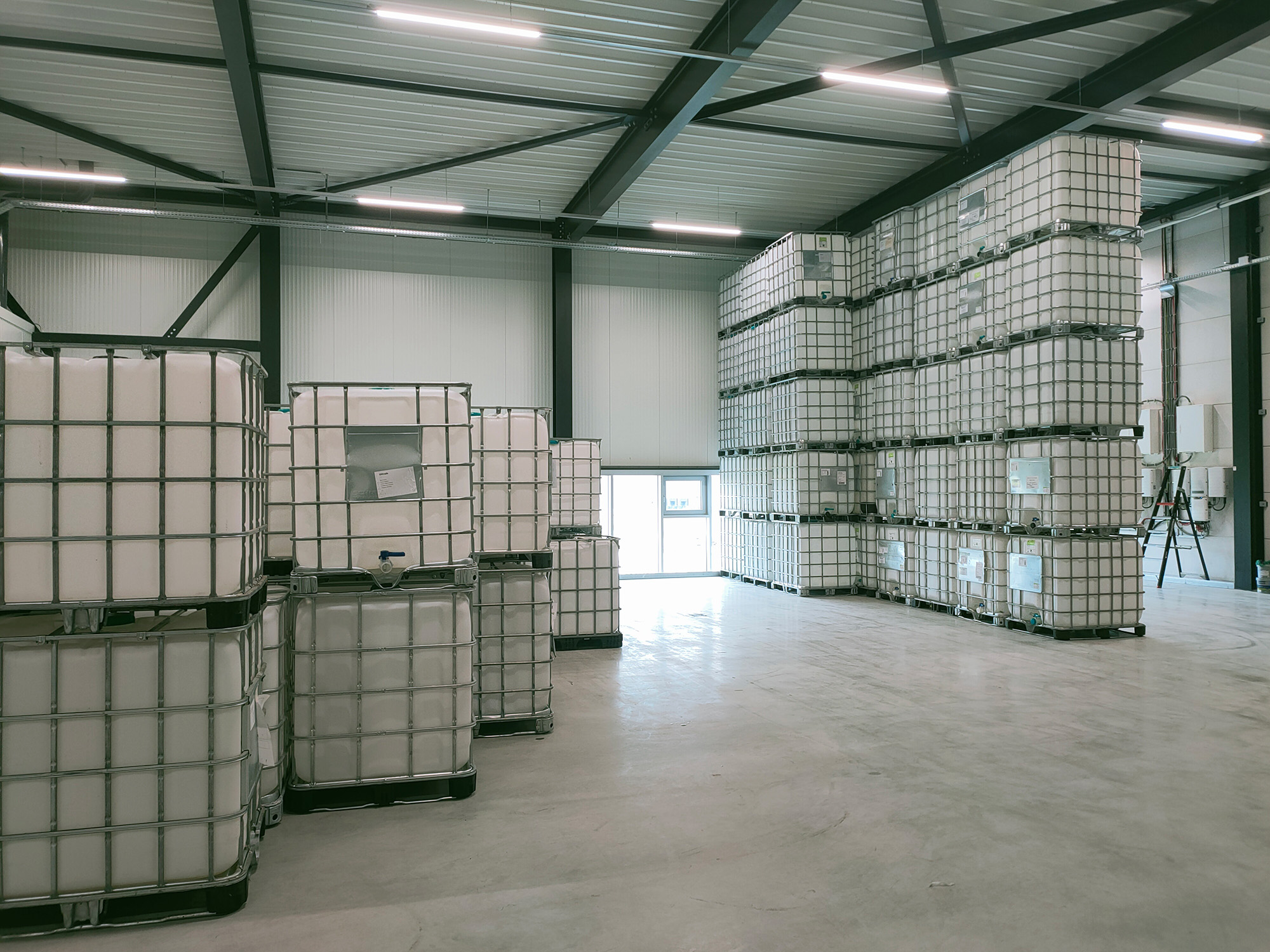
Key aspects include the infeed, outfeed, and storage of clean and contaminated packaging, the methods of internal transport, and the physical location of the cleaning system and technical area. Consideration is also given to wastewater drainage (such as channels and drip trays), as well as lighting, ventilation (to manage vapour formation), facility heating, and the disposal of residual product.